
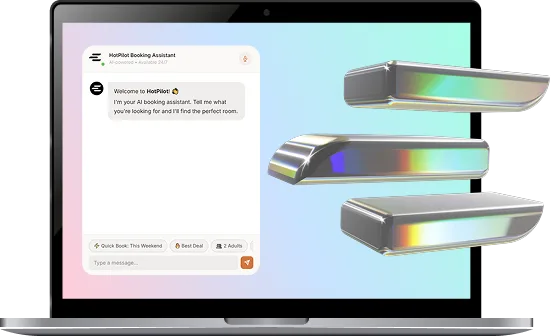

Finding the right technology & tools to enable customers book directly on your store has never been more important
Every direct booking is a margin point you do not have to share. Yet most independent hotels still lean on OTAs for 60–80% of their nights, even though their loyal guests would happily book on the brandsite if it felt as smooth as Booking.com. This article walks through the moves that actually shift the channel mix — booking engine, parity, conversion design, and the one metric that tells you when it is working.
Why direct matters more than ever
OTA commissions sit at 15–18% for standard contracts and creep above 20% when you opt into Genius, Preferred, or paid placement programs. That is real money. On a €120 ADR, every booking that flips from OTA to direct adds €18–25 to the bottom line — and you keep the guest’s email address, which compounds for every future stay.
There is a second effect that is easy to undersell: direct bookers stay longer, cancel less, and spend more on extras. Independent hotels we work with see average length-of-stay 12–18% higher on direct than on OTA, and ancillary revenue (breakfast, parking, late check-out) lifts even more.
Start with a real booking engine
A “book now” button that opens an iframe and asks for billing on page three is not a booking engine. It is a tax on intent. The 2025 baseline for a credible direct channel is:
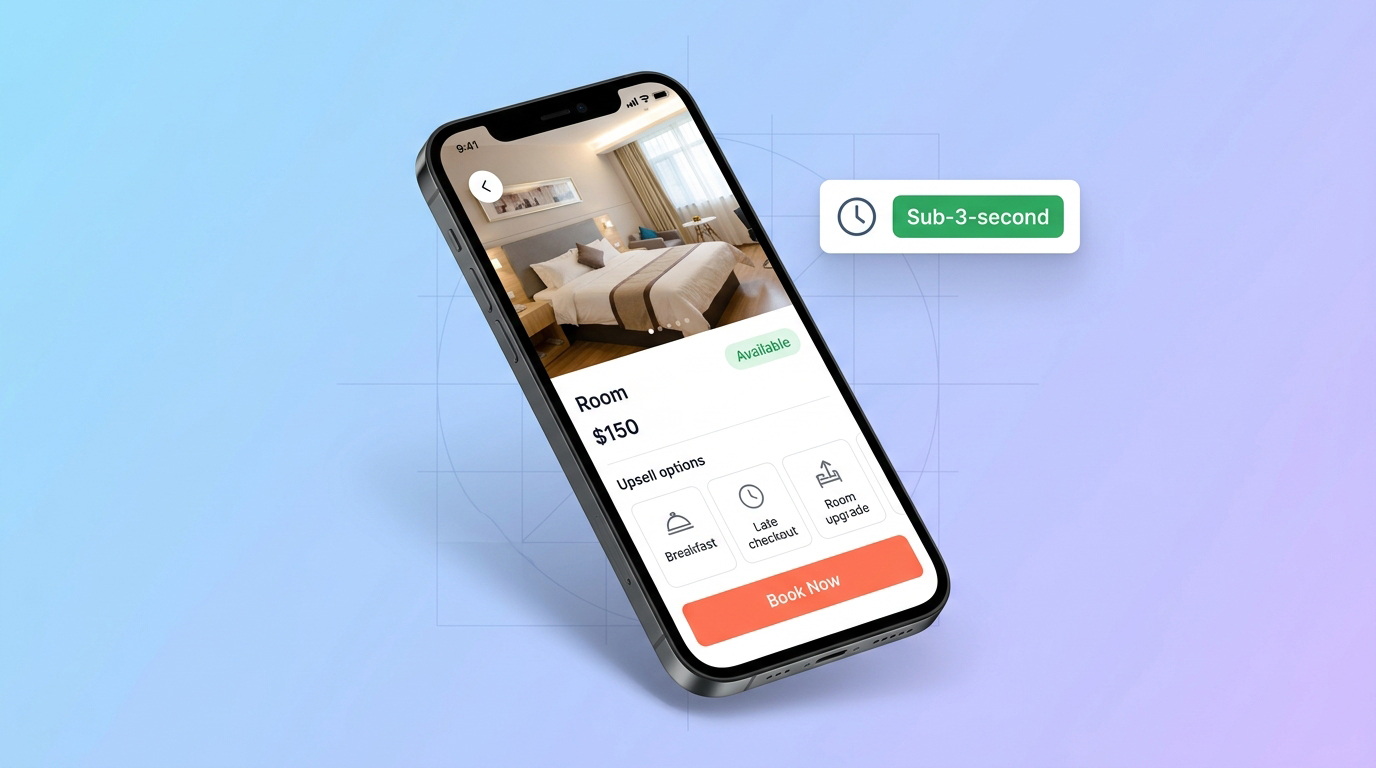
Sub-three-second time to first interactive.
Real-time availability and pricing — no “we’ll confirm in 24 hours”.
Mobile-first layout. Most travel research starts on phones.
Pay-at-hotel as a clearly offered option for trust.
One-click upsells (room upgrades, late check-out, breakfast) before payment.
If your current engine fails on any of those, you are paying OTAs to fix problems that you could fix in a sprint.
Hold rate parity, but win on value
The biggest mistake we see is hotels trying to “beat the OTAs on price”. Booking.com has a parity clause in most contracts, and even where it does not, racing down rates trains your guests to wait for the cheapest channel. You lose either way.
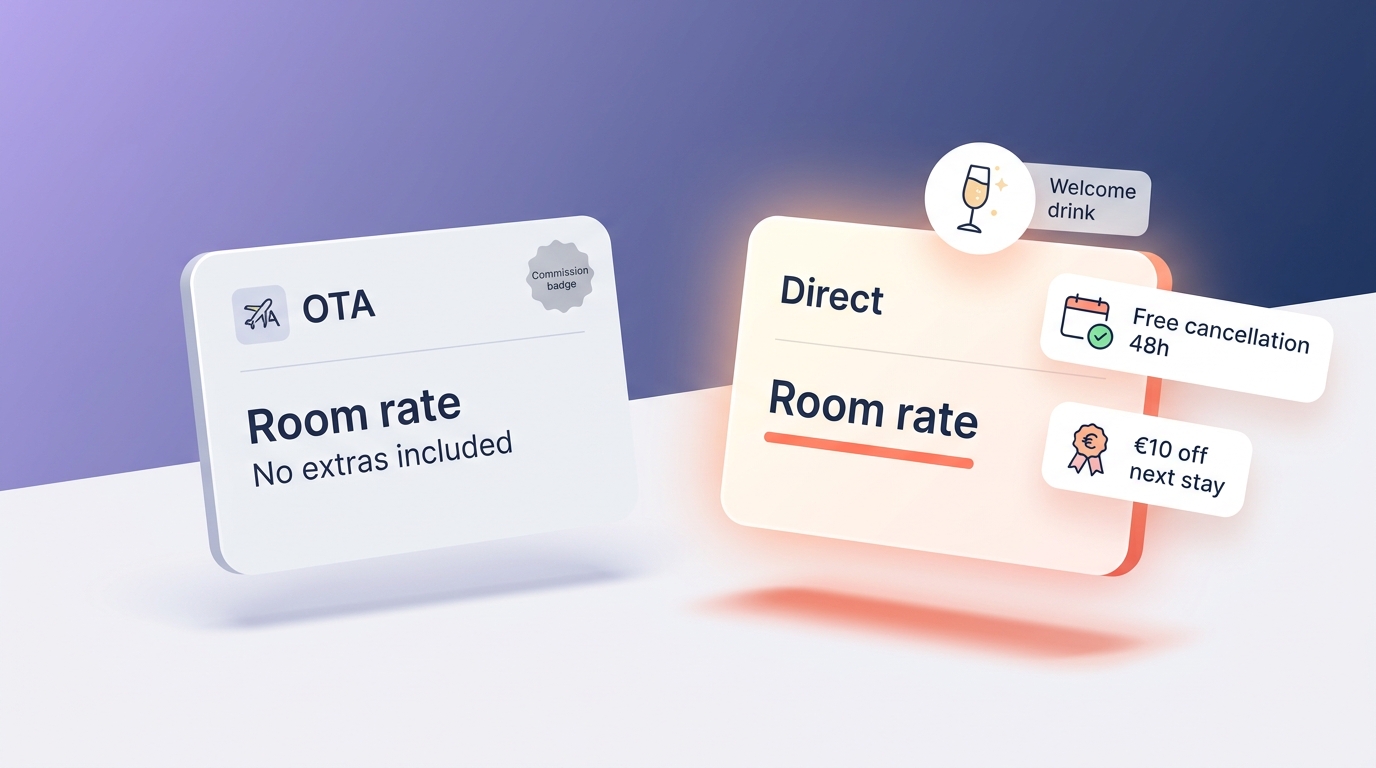
Instead, hold parity on rate and win on value-adds the OTAs cannot show:
Free welcome drink or upgrade for direct bookers.
Flexible cancellation up to 48 hours, where the OTA shows 7-day strict.
A small voucher (€10 off the next stay) emailed after check-out.
These cost the hotel a fraction of the OTA commission and the guest perceives a clean upside.
Conversion design that actually converts
Three small things move conversion rate more than any redesign:
A persistent room widget on every page. Guests browse photos, then need to book. Hide the widget and they bounce to an OTA.
Social proof above the fold. Average rating, number of reviews, one short quote. Best-performing direct sites use 4.6+ scores from Google rather than internal averages.
A real cancellation policy in plain language. “Free cancellation until 48 hours before arrival” outperforms “Non-refundable” by 30–40% on conversion for the same rate.
Once those three are in place, you can iterate on hero imagery, urgency cues, and language detection. But the order matters.
Measure the metric that matters
Forget gross direct revenue for a moment. The metric that actually tells you whether your direct strategy is working is direct-channel contribution after deduplication — direct bookings that did not also come through paid acquisition (Google Ads brand campaigns, retargeting) and are net new.
A simple test: turn off brand-keyword bidding for a week. If your direct rate barely moves, your “direct” channel was just paid acquisition wearing a costume. Real direct comes from organic search, repeat visits, and word of mouth.
Key takeaways
OTA commissions of 15–25% are real money — every direct booking is recovered margin.
A modern booking engine is sub-three-second, mobile-first, with real-time inventory.
Hold rate parity. Win on value: welcome perks, flexible cancellation, voucher follow-up.
Three conversion fixes outperform any redesign: persistent room widget, social proof above the fold, plain-language cancellation.
Measure direct-channel contribution after stripping out brand-keyword paid traffic.
Want to test this on your property? Start your HotPilot trial — hotpilot.ai. The booking engine, channel sync, and direct-conversion analytics are wired together out of the box.