
A guest who cannot understand your cancellation policy usually does not email for clarification. They close the tab. Language in a multilingual hotel booking engine is not a decorative gesture of hospitality; it determines whether a traveller can accept the price, conditions and payment with confidence.
Being almost understood is most expensive at the final steps.
Choose languages from real demand
You do not need every language. Start with where completed bookings and serious enquiries already come from, then compare that with flight routes, sales-channel demand and markets the property intends to serve. A language earns its place when enough guests need it and the hotel can maintain it.
Look beyond website sessions. A market may browse heavily and never find suitable flights or payment methods. Another may produce fewer visits but more completed stays and repeat enquiries. Booking-system and front-desk evidence is stronger than a generic tourism list.
Build a short market case:
- Completed stays and enquiries by guest language or origin.
- Direct and OTA bookings from the market.
- Relevant seasonal flight or transport access.
- Questions reception repeatedly answers because the site is unclear.
- Capacity to review policies and offers whenever they change.
Two well-maintained languages are better than six neglected ones. Each extra version creates another cancellation policy, tax label, room description and email sequence that can become stale.
Prioritise the booking path before translating every editorial page. The guest can survive an imperfect destination article. They cannot safely accept a deposit condition they misunderstand.
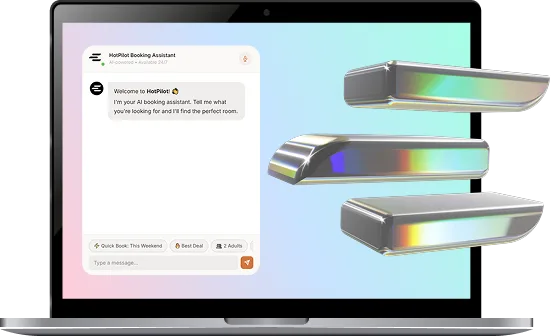
HotPilot’s booking flow supports English, Bulgarian, German, Greek, Romanian and Russian. That range is useful only when the property’s actual content and conditions in each chosen language are complete and current.
Translate transactional text with a human standard
Machine translation can help with rough internal understanding or low-risk marketing copy. In a transaction, a plausible but wrong word creates a different promise. “Refundable,” “deposit,” “per stay” and “per person” are not phrases where approximation is harmless.
Review these texts professionally:
- Cancellation and no-show conditions.
- Deposit, prepayment and refund language.
- Mandatory taxes and fees.
- Room occupancy, bed configuration and included meals.
- Payment errors and confirmation messages.
Keep a glossary for room types and commercial terms. If “sea-view studio” appears under three different names across the website, booking engine and confirmation, reception cannot easily match what the guest believes they bought.
Translate meaning, not sentence structure. A literal version may be grammatically recognisable and commercially confusing. The reviewer should see the complete booking context, including where the label appears and what action follows.
Every policy change creates a translation task. Do not publish the source-language update immediately while leaving other versions on the old conditions. Either coordinate the release or clearly remove an unavailable language until it is correct.
Use guest questions as quality control. If speakers of one language repeatedly ask whether breakfast is included, the relevant label may be technically translated and still unclear.
Show currency and explain what will be charged
A traveller decides faster when the price appears in a currency they understand. It reduces mental conversion and makes room comparisons easier. Display currency is therefore useful, but it must not create a false promise about the eventual card charge.
State which currency the hotel will actually charge. If the booking engine displays an indicative conversion while payment occurs in the property’s settlement currency, say so before confirmation. The guest’s bank may apply its own conversion and terms.
Keep three figures conceptually separate:
- The property’s base price and currency.
- The converted display used to help the guest compare.
- The currency and amount submitted for payment.
Do not label an indicative amount as exact if it can change before the card statement. Equally, do not hide the real charge currency in terms that appear only after payment.
Multi-currency presentation needs consistent treatment of taxes, extras and deposits. Converting the room while leaving tourist tax in another currency produces a total that looks unfinished. A refund should also be explained in relation to the original charge currency, without promising what the guest’s bank will return after conversion.
A multilingual booking engine with multi-currency display should preserve the selected language and currency through search, room choice, payment and confirmation. Switching back at the final step damages confidence precisely when the guest is ready to buy.
Translating a booking flow properly matters more than translating a brochure. If you sell into more than one language market, it is worth seeing a checkout that was actually built for six of them.

Payment habits change across markets
Cards are important, but the preferred payment method is not universal. Guests in different European markets recognise and trust different gateways, wallets and bank-led flows. A booking page designed only around what the hotel’s domestic team uses can silently reject international demand.
Review actual failure and enquiry patterns. Do guests from one market reach payment but not complete? Do they ask for bank transfer or whether a familiar method is accepted? Is a card type repeatedly declined by the current gateway?
Offer methods the property can operationally support, reconcile and refund. Adding a large collection of logos without a clear settlement and cancellation process creates front-desk work rather than accessibility.
The payment page should explain:
- the method selected and charge currency;
- whether payment is immediate or a guarantee;
- what happens after successful authorisation;
- how failure can be retried without rebuilding the stay.
Recognisable payment marks help only when they are genuine. Never display a method before it is available for that guest, currency and booking type.
Test international combinations, not merely the hotel’s own card. Use controlled checks for different languages, currencies and payment routes, including the return to confirmation.
International trust must be explicit
A domestic guest may know the neighbourhood, recognise the hotel’s legal context or call without considering international cost. A first-time traveller from abroad has none of that background. They need visible evidence that the property is real and the transaction is understandable.
Show a consistent property name, physical address, telephone number with country code and a monitored email. Keep the same identity across the website, booking flow, confirmation and major listings.
Present cancellation, payment and privacy terms before the guest commits. Hiding conditions does not make the page feel simpler; it moves uncertainty to the final moment.
Use current photographs of the room category being sold. An international guest cannot rely on local reputation to fill gaps between a poetic room name and the actual configuration.
Security cues should be factual. Use real payment-provider marks and a secure booking route, not a collage of badges that do not apply. Explain whom the guest is paying when the hotel and payment descriptor use different legal names.
Offer a way to contact a person, but do not use support as a substitute for clear text. Most uncertain guests will leave rather than formulate a question in a second language.
Never choose language from IP alone
Do not auto-switch language purely from the visitor’s IP address. A Bulgarian travelling in Germany, a Greek guest using a company network and an English speaker living abroad can all be stranded in a language they do not read.
Location can inform a suggestion, but the selector must remain visible. Let the guest choose, preserve the choice across pages and remember it on return where the applicable privacy approach allows.
Do not repeatedly override the selection. A guest who changes from German to English has provided better evidence than the network location. Respect that action through payment and confirmation.
Keep room names recognisable at reception. A creative translation that turns a named suite into an unrelated phrase makes arrival harder. Preserve the commercial identity and add a clear local description where needed.
Test what happens when:
- The guest changes language after selecting a room.
- They follow a saved link from another country.
- Payment redirects to an external page.
- Confirmation and pre-arrival email are generated.
Dates, guests, room and rate should survive every switch. Language choice should clarify the same booking, not create a new one with different conditions.
Let’s sum up!
- Choose languages from bookings, enquiries and access to the destination, then maintain every transactional version.
- Policies, deposits, taxes and payment errors need human-quality translation because approximation changes the promise.
- Display the guest’s familiar currency while stating clearly which currency will actually be charged.
- Payment preferences vary by market, so use completion and enquiry evidence rather than domestic assumptions.
- International trust depends on consistent identity, visible terms, real room imagery and recognisable payment routes.
- Never force language from IP alone; offer a visible selector and remember the guest’s explicit choice.
If you sell into more than one language and are not sure the checkout holds up, we are glad to walk through it with you.