The message saying that a room is ready, the check-in point has moved or the access road is closed competes with every other email in the guest’s inbox. On the messaging app they already use, it can be noticed while the information still matters. Hotel guest messaging through Viber, WhatsApp or another familiar channel is not merely a preference; the choice can decide whether an urgent update arrives in time.
Email has not stopped being useful. It simply performs a different job.
Match the channel to the lifespan of the information
A time-critical message belongs where the guest is likely to see it promptly. A changed arrival time, late check-in code, weather warning, transport disruption or question about tonight’s arrival benefits from a short message and a visible reply.
Reference information belongs somewhere durable and searchable. The booking confirmation, cancellation conditions, invoice, full directions and a document the guest may need again should remain in email. A traveller can search for the property name weeks later, forward the attachment or retrieve it without scrolling through a long chat.
The common mistake runs in both directions. Hotels send an urgent road closure by email because the address is already in the reservation, then send a long confirmation and policy document inside chat where it becomes difficult to find.
Use a simple test:
- If the value falls sharply when the guest reads it tomorrow, use messaging.
- If the guest will need to retrieve, forward or file it later, use email.
- If both are true, send a short alert in messaging that points to the durable email.
Do not copy the full content into every channel “to be safe.” Duplicate communication creates uncertainty about which version is current and increases the chance that staff update one copy but not another.
Hotel guest messaging with Viber depends on the market
Messaging habits are regional. Viber is an everyday communication channel in Bulgaria and across parts of the Balkans. WhatsApp is the default in many other source markets. A guest from a country where one app is habitual may rarely open the app preferred by the hotel’s own staff.
Choosing “what reception uses” is therefore the wrong question. Ask which channel the guest supplied, selected or used to contact you. If the booking path offers a channel preference, preserve it with the reservation instead of making the traveller repeat it on arrival.
Do not infer too much from the phone number alone. A foreign number does not prove which app someone reads, and an international guest living locally may follow a different pattern from their country code. Let behaviour and explicit choice lead.
A practical hierarchy can be:
- Reply on the channel the guest used first.
- Honour a selected contact preference when one exists.
- Use email for the full record and messaging for a necessary prompt.
- Fall back to SMS or a call only when urgency and the guest’s permissions justify it.
This approach avoids declaring one universal winner. It also prevents the hotel from opening every possible app for every reservation. The aim is relevant reach, not maximum channel count.
Consent is not a checkbox hidden inside booking
A guest provides a phone number so the hotel can manage the reservation and stay. That does not automatically mean they want promotional offers in Viber or WhatsApp after departure. An operational message tied to a booking and a marketing campaign are different uses with different expectations.
Keep necessary communication narrow: access instructions, a genuine change, a requested service or an important question about the stay. The fact that messaging has high visibility is a reason to use it carefully, not an excuse to turn every booking into a campaign audience.
Marketing needs its own appropriate permission and a working opt-out. Confirm the lawful basis and wording with the property’s adviser, because the exact requirements depend on context and market. A guest who asks to stop should not be re-added through another segment or app.
Make the sender recognisable. State the property name in the first useful message, refer to the actual stay and avoid shortened links that look suspicious. Never ask for sensitive payment information in an unexpected chat.
Getting consent wrong has two consequences. It creates a compliance problem, and it trains guests to block the hotel’s number. Once blocked, even a legitimate arrival update may no longer reach them.
Record channel choice, marketing permission and opt-out separately. “Has a phone number” is not a consent field.
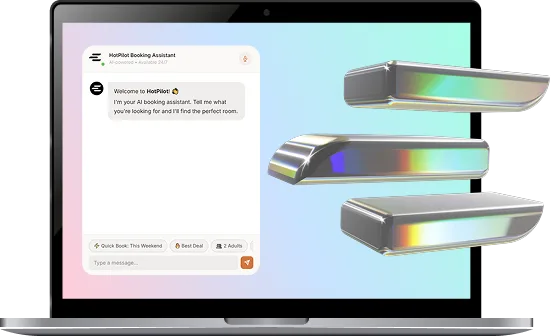
One inbox for email, Viber, WhatsApp and Messenger is less a feature than a way of making sure nobody is left unanswered on a Saturday. If that is a familiar problem, it is worth seeing how it looks in practice.
Four inboxes create one unattended conversation
When email is in one screen, Viber on a reception phone, WhatsApp on the manager’s device and Messenger in a social account, the hotel does not have four useful channels. It has four places where a guest can be forgotten.
The failure usually appears outside the easiest shift. A weekend message sits on the office computer, the shared phone is charging in a drawer or only one colleague has the social login. The guest sees that the message was delivered and assumes silence reflects the hotel’s attitude.
A unified hotel guest messaging inbox gives the team one operational queue while allowing the traveller to stay on the channel they chose. The useful outcome is not a fashionable interface. It is visible ownership: who replied, what remains unanswered and whether the next shift has the full context.
Set practical rules:
- Every incoming channel has an owner during opening hours.
- Unanswered messages appear in one queue rather than relying on notifications.
- A conversation can be assigned or handed over with a note.
- The guest’s history is visible without copying private chats between staff accounts.
Avoid replying from a different channel without explanation. If a guest writes on Viber and receives an unrelated email, they may not connect the two. Continue the conversation where it began unless a durable document or security reason requires a move.
Do not become the hotel that sends nine reminders
Every pre-arrival message should either give the guest something they need or ask for information the hotel genuinely needs. Everything else can wait. The existence of an automated template is not a reason to send it.
Useful messages include a requested transfer confirmation, a late-arrival access instruction, a material road warning or one concise request for arrival time when operations depend on it. Less useful messages repeat the confirmation, advertise several extras, announce the weather without consequence and then remind the guest that check-in is approaching.
Three well-timed messages beat nine generated because the workflow allowed them.
Map the guest’s sequence before activating automation. A direct booker may already have received a confirmation, payment receipt and pre-arrival email. Adding channel messages without seeing that history can make a restrained template feel relentless.
Frequency should also account for changes. If a guest has already replied with an arrival time, suppress the scheduled reminder that asks for it again. Automation that ignores an answer makes the hotel look as though nobody read the conversation.
Keep marketing after the stay separate as well. A review request can be useful; an immediate sequence of offers across email and chat is not a continuation of hospitality.
Automate facts and route emotion to a person
Confirmations, standard arrival instructions, check-out reminders and receipt notices automate cleanly because the underlying fact and timing are predictable. They still need current source data: automation should not send yesterday’s access code or instructions for the wrong property.
Special requests require judgment. A guest asking about an accessible room, a delayed flight or a child’s sleeping arrangement may need a person to understand the constraint before promising anything.
Complaints should always reach a human. An automatic “we value your feedback” response to someone locked outside at night is worse than a slightly slower reply that acknowledges the actual problem. Emotion and risk are signals to stop the template.
Design escalation rather than pretending every message can be automated:
- Identify words or conversation states that require a person.
- Assign the case to the active shift.
- Show the relevant reservation and previous messages.
- Confirm when the guest has received a real answer.
Automation is strongest at reliable repetition. A person is strongest where meaning, empathy or authority matters. The guest should not have to determine which system they are talking to before they can get help.
Let’s sum up!
- Urgent changes belong in a messaging channel the guest reads, while searchable records and attachments belong in email.
- Viber, WhatsApp and other apps have regional patterns, so follow guest choice rather than reception’s habit.
- A booking phone number supports necessary stay communication, not automatic permission for marketing.
- A unified inbox prevents weekend and shift-change messages from disappearing across separate devices.
- Every pre-arrival message should give needed information or request something operationally necessary.
- Predictable facts automate well; complaints, special requests and emotional conversations need a person.
If guests are messaging you somewhere nobody is watching at the weekend, we can show you the single inbox.