The same late check-out can feel welcome on the morning of departure and irritating while the guest is trying to book. Timing is not a minor detail of hotel upselling extras. It determines whether the offer solves a need or creates another decision.
The worst extra feels like a toll placed between the guest and the room they already chose.
Four moments, four different states of mind
During booking, the guest is comparing the main purchase. They are deciding which room, which rate and whether breakfast or another board option belongs in the stay. Offers that change the core product can make sense here because the decision is already open.
Between booking and arrival, the trip becomes real. The guest checks transport, arrival time, dinner and what happens if they reach the property early. This is the natural planning window for transfers, parking information, early check-in where genuinely available and a restaurant reservation.
During the stay, need replaces imagination. The guest knows whether they want the spa, another night, a later departure or a service they can now see. Relevance is higher because the context is concrete.
At departure, most new offers are too late. The guest is settling the bill, carrying luggage and thinking about transport. A future-stay invitation may fit, but trying to sell breakfast, an experience or a room enhancement for the stay that just ended only proves that the timing system failed.
Map the four moments before creating templates:
- Booking: changes to room, rate or board.
- Pre-arrival: transport and arrival logistics.
- In-stay: needs the guest can now judge.
- Departure: a restrained future relationship, if appropriate.
Do not send the same catalogue at all four stages. A long menu transfers the work of choosing from the hotel to the guest and makes every offer less relevant.
Match the extra to the decision already being made
Room and board upgrades belong near room selection. A guest comparing a standard double with a balcony room can understand the difference, see the total and decide before committing. Hiding the upgrade until arrival can feel like the original choice was deliberately incomplete.
Transfers, early arrival arrangements and dinner reservations belong before the stay. They answer planning questions that emerge after transport is booked. Send them close enough to arrival that plans are real, but with enough time for the hotel to deliver.
Spa appointments, extra nights and late check-out fit better during the stay. The traveller has experienced the property, knows their departure plan and can value the convenience. Do not offer late check-out when the hotel already knows the room must turn quickly for an early arrival.
For every extra, write:
- The guest situation that makes it relevant.
- The earliest moment they can judge its value.
- The operational condition required to deliver it.
- The point at which the offer should be suppressed.
A family with a child may need a cot, but accessibility and basic sleeping arrangements are not automatically sales opportunities. Relevance is not permission to monetise every known attribute.
The offer should also agree with the reservation. Do not promote breakfast when it is included in the rate, a transfer after one has been booked, or a room upgrade when no eligible room remains.
Keep upsells away from the payment step
The payment step has one job: let the guest finish the booking they already decided to make. An upsell inserted there adds another choice at the moment of highest purchase intent and greatest sensitivity to interruption.
Anything that slows the payment screen is not a clever upsell. It is abandonment with a price tag.
The guest may open details, compare the new total, ask a companion or worry that the original room is missing something important. Payment credentials expire, redirects fail and mobile forms lose focus while that extra decision is being made.
Place product-changing offers before the guest commits to the final total. Once they move into payment, preserve room, rate, conditions and amount. Extras that can wait belong after confirmation or in the pre-arrival sequence.
Audit the page on a phone:
- Is the total stable from the previous step?
- Are optional items absent unless deliberately chosen earlier?
- Can payment complete without opening another decision panel?
- Does a failed payment retain the original selection?
If an extra appears only because the payment screen has high traffic, the hotel is optimising exposure rather than the guest’s task. Measure completed bookings alongside extra sales; a small add-on gain can conceal lost room revenue.
A clean checkout also protects trust. The final screen should confirm the purchase, not reveal that the hotel has one more thing to sell.
Matching the offer to the moment is a rules problem, not an intuition problem — who is arriving late, who has a child in the party, which rooms have an upgrade free. Seeing those rules run on your own arrivals makes the idea concrete quickly.
Price visible services so they feel fair
An extra priced close to the guest’s understanding of its cost feels like a service. One priced at a large multiple feels like a toll. The reaction matters even when the amount is small compared with the room.
Early check-in is the clearest example. The guest can see that the room is already clean or that the decision is mainly scheduling. A high charge produces resentment out of proportion to the money because the visible cost to the hotel appears low.
Price should reflect real constraints such as labour, reserved capacity, supplier cost and displaced demand. Reception should be able to explain it honestly, and delivery should not create an unrecorded burden for another team.

Optional must look and behave as optional
Pre-ticked extras can lift short-term attachment because guests fail to notice them. That is not a genuine sale. It produces refund requests, disputes and reviews saying the hotel added a charge without consent.
If the guest did not choose it, you have not sold it.
Use an empty choice with a clear description and price. Show how it changes the total immediately. Make removal as easy as addition and carry the choice into confirmation so the guest knows what was purchased.
Avoid visual pressure:
- Do not label the standard room choice as a mistake.
- Do not hide “no thanks” in faint text.
- Do not restart a declined offer at every step.
- Do not use a countdown unless the underlying availability genuinely expires.
Staff-assisted sales need the same clarity. At reception, ask rather than assume, and confirm the amount before adding the item to the folio.
Track refunds and complaints by extra, not only gross sales. A product with high attachment and repeated reversal may be poorly described, badly timed or made to look compulsory.
Optional presentation also protects operations. A deliberately selected transfer or dinner reservation is more reliable for planning than a pre-ticked item the guest never realised they owned.
What never to upsell
Never upsell something the guest could reasonably expect to be included in the promised stay. Basic room readiness, ordinary cleanliness, the booked bed configuration and the services explicitly listed in the rate are not enhancements.
Never upsell safety or accessibility. A safe room, an accessible route the property committed to provide, essential assistance and reasonable communication are not premium products. Charging because a guest has a need turns hospitality into a penalty.
Never upsell to a guest who has just complained. Resolve the problem first. An automated spa offer arriving after a message about no hot water is one of the most avoidable ways to show that nobody is reading.
Also avoid selling:
- A service you cannot confirm or deliver reliably.
- An upgrade that removes something already promised.
- An extra unsuitable for the party or known circumstances.
- A benefit created by withholding ordinary information.
These boundaries should be rules in the workflow, not dependent on a receptionist remembering at the right moment. A complaint status, sold-out service or accessibility request should suppress the offer.
The short-term value of one extra never outweighs telling a guest that the hotel sees every need as inventory.
Automate selection, keep the tone human
The right moment and relevance can be expressed as rules. A late arrival may need a transfer or access instruction. A standard-room booking may be eligible for an available upgrade. A family party may value a dinner time that fits its schedule.
Automation is useful for selecting who should see which offer and suppressing it when the conditions fail. It prevents the hotel from sending a generic catalogue to everyone.
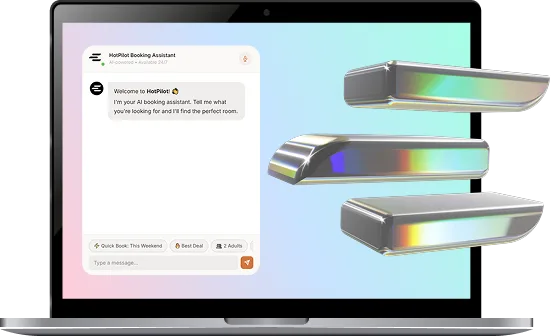
An AI upsell and cross-sell process for hotels can use booking context to choose a relevant moment, while the message remains short and written in the property’s voice. The technology should reduce irrelevant offers, not increase total message volume.
Keep operational ownership:
- Inventory-backed extras confirm only when capacity exists.
- Requests needing approval become a task rather than an instant promise.
- Guest replies reach a person with reservation context.
- Complaints and opt-outs suppress promotional automation.
Review what was not offered as well as what sold. A rule may be too narrow, but it may also be correctly protecting guests from noise. More impressions are not automatically better.
Automation makes timing consistent. It does not make an unfair price, unavailable service or insensitive offer acceptable.
Let’s sum up!
- Booking, pre-arrival, in-stay and departure are different buying moments and need different offers.
- Match upgrades to room choice, logistics to planning and stay extensions to the lived experience.
- Keep upsells out of payment because another decision at checkout can cause abandonment.
- Fair pricing reflects visible work and capacity, while optional extras must require a deliberate choice.
- Never upsell expected inclusions, safety or accessibility, or anything to a guest who has just complained.
- Automate relevance and suppression rules while keeping the message human and delivery operationally owned.
If your extras are offered at the wrong moment — or at the payment screen — book a demo and we will show you the four moments that work.